Showing posts with label books I don't recommend. Show all posts

Wednesday, March 26, 2025

The Bookish Life of Nina Hill by Abbi Waxman


The Bookish Life of Nina Hill by Abbi Waxman is shelved under romance and chicklit in Goodreads, but I don't know if I'd say it's either...

Nina Hill is in her late twenties, works at a bookstore, has a cat named Phil, and covers her miserable existence by filling her days with fitness classes, book clubs, movie nights, and bar trivia. She is the only daughter of a single mother who travels the world as a photographer. Nina rarely leaves Los Angeles. She suddenly finds out that the father she never knew existed has died, left her something in his will, and that she has a whole bunch of extended family, including siblings. 

There's a lot going on here. 

And then Waxman overlays this with Nina trying to start a relationship with some guy whose name I can't remember from an opposing trivia team. A guy who doesn't have a planner or keep a calendar, doesn't read, and seems to only like Nina because she'll pay him attention. And somehow this boring loser is supposed to make this a romance novel?

AND. Let's talk about this. Nina is supposed to be a reader, but we never see or hear about her reading. She's super obnoxious about trivia (IMAGINE trying to have a meal with this woman - every time you started a topic she'd derail it into some inane piece of trivia even she thinks is boring, but somehow she thinks you need to know that she knows) and honestly I feel like that could have been enough, but Waxman is like "she's a reader and that's how she knows all the trivia," but Nina is so busy that she has to have Thursday night set aside to read. Excuse me? If your entire identity is tied up in being a reader, you read all the damn time (ask me how I know). 

AND. Let's talk about Nina's identification as an introvert. I'm not suggesting that introverts never leave their house, but introverts generally do not like to leave their houses. We will, of course, but then it takes us days to recover and be willing to go out again. My husband and I joke about how I spent a few hours with a friend a couple of weekends ago (a friend! a lovely person! doing something very low-key! I enjoyed it!) and then needed the entire week and the next weekend to recuperate. I have a limit that I will do one fitness class a week after work and one social event on the weekends. That is my max. I'm literally not over here filling in every second of my schedule. I suspect Waxman is an extrovert. 

AND. I don't understand if Nina is smart or not. Ha ha! My boss is always late with the rent and we hide from the landlord. That's super normal, right? (WTF, Nina?) Ha ha! My father, who I've heard was quite wealthy, left me something in the will. If it were me, I'd be wondering what he left me. Money? Jewelry? A letter? NOTHING. SHE NEVER THINKS ABOUT IT. What is wrong with her? When she asks her mother about her father, she never seems to think about whether or not this discussion will make her mother uncomfortable or bring up unpleasant thoughts. 

Predictable ending - you knew the ending as soon as the will was mentioned, right? And the boyfriend (Tom? Tim? Tad? Tyler? Theo? - okay, fine, I looked it up - his name is Tom)? We know they're going to be together in the end, but is that what we want? Doesn't he seem like an utter douche canoe who is super boring and doesn't communicate well in arguments and pouts like a child? So many red flags, there, Nina. Get out. Or maybe don't. Maybe you two people deserve each other.

Don't read this book. 2/5 stars - I have a lot of regrets about finishing it. When will I ever learn to DNF? 

Lines of note:

How many people do we encounter every day who might be related to us, or simply people who might have become the best friends we ever had, or our second spouses, or the agents of our destruction, if we only spent more than seconds with them? (location 1979)

This is an interesting question. Every person we interact with has an entire life. How many of those lives would fit in with yours?

“He wasn’t right for me, anyway. He didn’t read.” 
“Reading isn’t the only thing in the world, Nina.” 
“It’s one of only five perfect things in the world.”
“And the other four are?” 
“Cats, dogs, Honeycrisp apples, and coffee.” (location 2160)

First, she ends up with a jerk who doesn't read in the end. Second, what are your five perfect things? 

Libraries were her favorite places, and when she traveled, she would start out at the local library, thus immediately identifying herself as a total nerd. (location 2202)

I also like to go to libraries when I'm on vacation. BUT! There's a whole thing in here about how she never leaves LA, but then she talks about traveling all the time. FIGURE IT OUT, WAXMAN.

Phil was perched on top of the gate, watching them. Nina nodded. 
“I do. He’s mine.”
 “What’s his name? He’s judging me.”
 “His name is Phil, and actually,” said Nina, “he’s judging me.” (location 2434)

Cats should not live outdoors in cities. It is unsafe for them and they are killers of birds and small mammals. #teamphil #ninaisaterribleperson

The new dog had his tail tucked and his eyes were grave. (location 2543)

Welcome to my house. My dog is like this a good 20% of her life. Last night when I was making human dinner after feeding animal dinner, Hannah came up to me with her tail tucked and sad eyes and bumped my hand for pets. After petting her for about ten seconds, I got back to dinner. Then she went over to the backdoor and nudged the doorknob, so I opened the door and went outside with her. Her tail started wagging and she was content to just go over to a pinecone and sniff it. She played me like a fiddle. 

Parents get stuck in the amber of childhood, right? Whenever my parents visit, I feel myself becoming a cranky fourteen-year-old. (location 3221)

I instantly revert to a snotty teen when I'm around my sister. I try not to, but...

What I looked up:

“She also likes those drawings by Hirschfeld, you know, where he hid the name Nina somewhere in the picture . . . (location 2799)

This was vaguely familiar to me, but I couldn't quite place it. I have already looked up Hirschfeld before for a book review. Hirschfeld was an American caricaturist who was known for placing the name NINA in his drawings. Nina was his daughter and he started this practice after she was born.

Hat mentions (why hats?):

She said sockAH instead of soccer, or lollies instead of candy, but it wasn’t like she walked around in a hat with corks dangling from it. (location 249)

Nina reached Larchmont Boulevard, with its artisanal hat and cheese shops (two different shops; that would be a weird combination, especially in warm weather), and turned into her favorite café to grab a gluten-free low-fat bran muffin. (location 393)

Mr. Sarkassian was balding on top but with hair around the sides and back, like someone wearing a brown woolly hat with everything but the brim removed. (location 440)

“Backward hats, or, actually, any hats. I hate hats.” (location 707)

The hat store had a sale on berets. (location 1128)

“All right, young one,” said Liz, pulling on her battered Dodgers baseball hat. (location 1297)

Walking into a room full of strangers was about as comfortable for her as putting on a hat full of wasps and tugging it down firmly. (location 1594)

...and a large felt hat with a brim the size of Poughkeepsie. (location 3606)

...the California Quizzly Bears had also brought a sizable contingent of fans, who were wearing bear claw gloves and Smokey Bear hats. (location 3698)

She was wearing an entire grizzly bear head as a hat. (location 3718)

“Why doesn’t the Man with the Yellow Hat take his responsibility seriously?" (location 3833)

"The Man with the Yellow Hat is the victim." (location 3835)

Wednesday, January 08, 2025

The Berry Pickers by Amanda Peters

You ever read a book and just hate it, but then you realize you're more than halfway through and you keep thinking the book is going to change and become what you want it to be? But the book never does that? And suddenly you're 80% of the way through the book and you realize you need to just finish it? Well, that's how it was with me and The Berry Pickers by Amanda Peters.

It started off in a way that really got me excited. In the 1960s, a Mi’kmaq family from Nova Scotia arrives in Maine to pick blueberries for the summer. Their four-year-old daughter Ruthie goes missing and her older brother Joe was the last one to see her. Great start, right?

But the next chapters switches to a woman's point of view reminiscing about her childhood and how she had nightmares and we soon learn that this is the adult Ruthie, now known as Norma, who grew up in a white family with a somewhat absent father and an alcoholic mother.

And like...that's the book. There's no mystery. We know what happened. So, okay, I said to myself after that disappointing second chapter, maybe this is a character driven story. So let's settle in for learning about characters.

Womp womp. It was like reading what an eighth grader thinks about adults. Norma is cold and kind of like a robot. I guess we can understand how she got that way, but almost all of her interior thoughts are hidden from us. I guess Peters wanted us to draw some inferences from her actions and what she finds out, but frankly, I needed a lot more help. Meanwhile, Joe, who grew up in a very loving First Nations home, is an abusive alcoholic and his motivations for his anger are never really clear. Again, I think maybe Peters is wanting me to make inferences about the lives of indigenous folks and the history thereof and how Joe would feel guilty over Ruthie's disappearance, but, hey, I've never been the older sibling of  a missing indigenous child. I would like some help on how that would shake out. 

So if you're not going to give me a plot (dear lord, nothing happens in this book) and you're going to keep the character's thoughts mostly off-page, WHY BOTHER WRITING THIS BOOK? I don't know, friends. I don't know. A real snooze. 1.5/5 stars

Lines of note:

A responsibility comes with that, being the youngest, the last baby. I never did live up to the responsibility (timestamp 2:14:34)

Is there a responsibility? I don't think I feel it. LOL.

You rarely notice change when you see someone every day. I hadn't noticed her skin start to wrinkle or the dim brown of an age spot as it spread across her jaw, the slight belly that came with menopause and stayed. (time stamp 2:36:05)

This was good observational writing. 

Hat mentions (why hats?): 

...his bald head red from the cold, his hat in his hands. (timestamp 1:19:12)

...showed two girls standing on the steps of a church, hats straight and hands at their sides, smiles wide and mishcevious. (timestamp 1:44:13)

...a large hat box in her arms. (timestamp 1:58:40)

She, with a hat box in her hands, and I with a dish towel in mine. (timestamp 1:59:03)

...adjusting her sun hat to cover her eyes. (timestamp 2:06:16)

...men who tipped their hats when people walked by. (timestamp 2:44:47)

...blue hospital hat on his head...(timestamp 3:52:43)

Monday, September 16, 2024

The Longest Race by Kara Goucher

I read  The Longest Race: Inside the Secret World of Abuse, Doping, and Deception on Nike's Elite Running Team by Kara Goucher and Mary Pilon because one of the prompts for the Pop Sugar Reading Challenge this year is a book about women's sports and/or by a woman athlete and all my bloggy friends recommended this one. Spoiler alert: I should have Nadia Comaneci's memoir instead. 

Huh. So I listened to the audiobook, which is narrated by Goucher herself and let me tell you, they should have paid someone else to do it because listening to her struggle through some of her own words (extenuating nearly did me in) was PAINFUL. AND! AND! She's another person who does not know the difference between the words woman and women and uses them incorrectly! Ugh.

So Goucher was a track athlete who was semi-successful in college, married a guy who was an elite runner, and then they both joined up with the Nike Oregon Project where she eventually became a more successful runner than her husband. But behind the endorsements and podium finishes, there was a lot of drama, including shady behavior on the part of her coach and teammates that culminated in emotional, physical, and sexual abuse. 

This is a tricky review to write. On one hand, Goucher is a victim. I feel terrible for her and what she went through. I can understand why she didn't tell anyone about some of the abuse.

On the other hand, she's hugely entitled? She lands a big endorsement deal that clearly says that if she doesn't race for 120 days, she won't get paid. So she gets pregnant, NEVER CHANGES THE CONTRACT, and gets upset that Nike won't pay when she can't race. Like...why would they? She's making more in one quarter than what I make in three years and she has the gall to complain about the bad health coverage? That she knew about before she got pregnant? Save your pennies like the rest of us plebes. 

I'm not saying these aren't terrible systematic issues in these United States. Health coverage tied to employment is barbaric and the maternity and paternity leave in this country is a joke. But literally every family has to deal with it. I don't know why she acted like it was unique to her or that it was so exhausting and trying for her. Try doing it when you're an hourly worker, Kara! Her inability to make any links between her experience and the experience of the average person was seriously pissing me off. 

And...is anyone really buying that she was clean? It's obvious to me that her morality is fluid (taking money from Amway, for example) and I don't buy that she wasn't doping. Sure, you threw that pill in the trash, friend. Sure you did. (This is also a 100% me problem, but there were a lot of verrrry boring race and training recaps. If that's your jam, great. It is not mine.)

Anyway. Yes, I believe that terrible things happened to her. Yes, I think having children in the United States is a very hard thing. Yes, I found this infuriating to read.  2/5 stars


Lines of note:

At home, she read us Anne of Green Gables and the Little House on the Prairie books, got us to the bus on time for school, and cooked our dinners...We dogeared the American Girl catalog as soon as it landed in our mailboxes. (timestamp 28:30) 
I always like it when some of the classics get namedropped in books. And if you were a woman of a certain age and didn't read the American Girl catalogs like they were magazines, we did not have similar childhoods. 

I was fine-tuning my ability to recognize the difference between and injury and good fatigue, the line between something is wrong with my hip and I'm sore getting out of bed.  (timestamp 2:26:00)
In light of my husband's recent rhabdo diagnosis, I'm trying to be exceptionally aware of this myself. Is this soreness, something that could turn into an injury, or an injury? 

I should have done it myself, told everyone that I wasn't going to practice, that I wasn't going to race that weekend. But I operated as if I had no choice because that's how I felt. (timestamp 5:24:16)
FFS. So many times this lady (or her husband) could have even looked for another job (with health insurance!) and instead she just kept on keeping on. I know I sound unsympathetic, but I swear I'd be a lot less pissy about the whole thing if she'd just attempted some other options (other teams, other coaches, other jobs, etc.). 


Monday, November 27, 2023

Happiness Falls by Angie Kim

Happiness Falls by Angie Kim felt a little bit like a mini-bloggy book club because so many people were reading it. I felt obligated to read it to be part of the discussion. 

The story is told from the point of view of Mia, a college student who is home during the pandemic with her mother, father, twin brother John, and  her disabled fourteen-year-old brother Eugene. One day Eugene goes out to the woods with his father, but comes home alone, upset, covered in dirt and blood, and no one knows where their father has gone. Unfortunately, Eugene's disability means that he cannot communicate with the family or the police about what happened. 

What follows is the family's search for the father, secrets being revealed, and endless passages about the research the father was undergoing about happiness. 

I have three minor critiques here.

1) I found the tone of the main protagonist to be quite off-putting. It's relentlessly negative. The very first paragraph of the book includes the sentences: I don't believe in optimism. I believe there's a fine line (if any) between optimism and willful idiocy, so I try to avoid optimism altogether, lest I fall over the line mistakenly. (page 3)  On one hand, this relentless glass half empty attitude is great characterization, but it also made me not want to spend time with her and it definitely didn't make me feel like I cared about what happened to her family since she herself didn't seem to care very much. 

Also, don't get me started on the random musings about happiness research and the happiness quotient. I am 100% sure none of that nonsense paid off in the end.  

2) I was bothered by the use of the pandemic as a plot point. There's a point when they are in a police station and the author makes a point about talking about how everyone's wearing masks, but then describes  a woman as "looked like our high school librarian - short, flat all-white hair atop a long, narrow face with a pointy chin" (page 141), but there's no way her chin would have been visible.  In June of 2020, just about every one of my waking thoughts was about the pandemic and while I acknowledge that my experience wasn't like that of everyone's, the use of the pandemic as a plot point only when it was convenient (as in, there is an outbreak so X won't happen) didn't endear me to the story.  

3) The father is a missing person in this book. And that's fine, but it was hard to feel really invested in what happened to him when there was no development of his character because he's also an entirely missing character in the book. The author would just tell you his character traits, rather than slip in a little anecdote or remembrance about him so we'd get to know him better. 

Dad was one of those naturally hyper-skeptical people. You know the type, who equate cynicism with depth and intellect, who go around saying "anecdotal proof" is oxymoronic, who demand objective evidence, by which they mean quantifiable and replicable data from double-blind placebo-controlled tests. (page 270)

Wouldn't it have been so much better if we'd had a scene in which the father did/said those things instead of just having the main speaker say it? It was a really frustrating part of the book because the father was so crucial in just how much you as a reader would care about the outcome of the book.

But my biggest critique is one that I'm not seeing or hearing much, so I'd be curious if my reading is wrong. 

I feel about how this book deals with disability the same way I feel about how The Friend Zone deals with women's health. I'm going to enter into some spoilers here, so if you're going to read this book and want to go in cold, stop reading. (SERIOUSLY! SPOILERS AHEAD.) 

Remember how in The Friend Zone, Abby Jimenez wrote an ending in which a woman's IUD falls out during a heavy flow and has a completely normal, healthy pregnancy ending in a healthy baby? Do you remember how Jimenez wrote an author's note about how this totally happened to her friend and it wasn't actually about the pregnancy ANYWAY.  Do you remember how irate I was? Because it downplayed the difficulties that so many women have with fertility and dismissed the most likely outcome of the character's situation?  And, also, using birth as the ending of a romance novel makes the book much less interesting. Wouldn't it have been so much better if the couple had to overcome this obstacle and go in a different direction?!

Well, here I am feeling the same way about THIS BOOK. In the end, it turns out that while Eugene cannot speak, he can communicate. And the book just ignores the reality of what life is like for so many people who do have disabilities that means they cannot communicate. And then in the author's note, the author has the GALL to write about how this DOES happen and the technology does allow for some people with certain types of disabilities to communicate, even if they were thought to be nonverbal before. 

But what are the odds? The odds are that this WOULD NOT HAPPEN THIS WAY. Eugene would not be able communicate, the case would go cold, the family would have to adapt. And I think that would have made for a much more interesting story and ending overall.  Why are there not more people in the disability community upset about this?!

Anyway, this was a miss for me. I haven't read the author's debut novel, Miracle Creek, and I don't think this is encouragement for me to do. 2/5 stars


Lines of note:
When an emergency happens, you expect the whole world to shut down, or at least you wish it would, because, of course, your own world has. (page 122)
I remember how ordinary the world was when my MIL was dying. In that house, everything was centered on taking care of her and how we would make her last days as good as possible, but we still had to go to work, find insurance providers, and buy groceries. It just all seemed surreal. 

I thought how I didn't really look at my friends' parents, how they seemed more like blobs who perform societal roles rather than distinct people whose specific facial, vocal, and other features I actually process and retain. (page 136)
I mean, isn't this true about most people we know? We don't really take in all the visual information we're provided with, do we? (Or maybe you do. I certainly do not.)

Math, I dismissed as something akin to manual labor, merely indicative of one's ability to contribute to society in a menial way, like a worker bee to a hive. But verbal acuity, that was what I myself admired and equated with intelligence. Didn't everyone? Wasn't that why everyone loved those fast-talking (and therefore smart) characters in The West Wing? (page 271-272)
Huh. I don't really feel this way, but I found myself persuaded by this argument.

Hat mentions:
They commented publicly on John's post, and less than a minute later, in this private platform, they posted selfies with huge smiles, confetti, party hats framing looks of orgasmic joy plastered on their faces - it seemed lewd, like I should avert my eyes, the incontrovertible evidence punching me in the gut. (page 246)

"I asked this woman if I could use her phone to text you, but she was all suspicious, and her hat blew off so I got it for her, and she went crazy and told me to get away." (page 279)

Wednesday, September 13, 2023

Mrs. Lincoln's Dressmaker by Jennifer Chiaverini

Mrs. Lincoln's Dressmaker by Jennifer Chiaverini was my book club's pick for this month. 


Elizabeth Keckley was a very interesting historical figure. Born a slave, Keckley bought her freedom and moved to Washington, DC to work as a seamstress. She eventually sewed gowns for the elite of DC and had patrons that ranged the gamut from Varina Davis, the wife of Jefferson Davis to Mary Todd Lincoln when she was the First Lady. After President Lincoln was assassinated, Keckley remained in the service of Mrs. Lincoln until Keckley tried to raise some funds to support herself by writing a memoir called Behind the Scenes, or, Thirty years a Slave, and Four Years in the White House. You can find the entirety of Behind the Scenes online for free.  This memoir created a schism between Keckley and Lincoln. 

Mrs. Lincoln's Dressmaker is a fictional account of Keckley's life. It's also boring as hell. 

Consider the following passage from Behind the Scenes:

General McClellan, when made Commander-in-Chief was the idol of the soldiers, and never was a general more universally popular. "He is a humbug," remarked Mrs. Lincoln one day in my presence.

"What makes you think so, mother?" good-naturedly inquired the President.

"Because he talks so much and does so little. If I had the power I would very soon take off his head, and put some energetic man in his place."

"But I regard McClellan as a patriot and an able soldier. He has been much embarrassed. The troopes are raw, and the subordinate officers are inclined to be rebellious. There are too many politicians in the army with solider-straps. McClellan is young and popular, and they are jealous of him. They will kill him off if they can." (page 132-133)

This is interesting. It tells us about what's going on with the war, Mrs. Lincoln's own high opinion of herself, a bit about the relationship between the Lincolns, and how much trust Keckley must have had to be in the room when such a conversation happened.

Compare that to the following passage from Mrs. Lincoln's Dressmaker:

In mid-September, in a costly battle along Antietam Creek in Maryland, General McClellan managed to repulse General Lee's advance into the North. Although the president was displeased that General McClellan had allowed the battered Confederate army to withdraw to Virginia without pursuit, the stalemate was victory enough to hearten him. (page 110)

Can you see me nodding off here as I was reading some weird history book focused on battle recaps and military strategy? 

Thumbs down for me, folks. Read Behind the Scenes and skip this fictionalized nonsense. 2/5 stars

Notes from book club:

Yep, this book is boring. 

Things I looked up:

mantua (page 2) - article of women's clothing

 A Keckley dress that Mary Todd Lincoln wore. You can see this gown at the Smithsonian's National Museum of American History in the First Ladies exhibit. 

osnaburg cloth (page 7) - Sturdy, plain-woven cotton fabric used frequently for work clothes or patterns for garments made of more expensive fabrics

The Great Skedaddle (page 63) - In July 1861, the first major battle of the American Civil War. It was a bit of a disaster and led to the Union soldiers fleeing in a disorganized retreat. 

Thanksgiving as a federal holiday (page 152) - Lincoln was the first president to declare Thanksgiving a federal holiday in 1863. Here I am thinking it's been around since the country was founded because we talk about Pilgrims constantly in elementary school. Education is a sham. (/s)

Hannibal Hamlin/Andrew Johnson (page 171) - Lincoln's first VP was Hamlin. I didn't know this guy existed. Johnson was his VP for his second term and Johnson showed up drunk to his own inauguration and is probably one of the worst presidents in American history. 

Mary Todd Lincoln was a spendthrift (page 173) - Mrs. Lincoln had a bit of a shopping addiction.  True facts from history.

barouche (page 188) - four-wheeled horse-drawn carriage with a collapsible hood over the rear half

Barouche. Source.

cynosure (page 201) - a person or thing who is the center of attention or admiration (AKA Zelda the Cat)

catafalque (page 229) - a raised box, bier, or similar platform, often movable, that is used to support the casket, coffin, or body of a dead person during a Christain funeral or memorial service. The Lincoln catafalque was hastily in 1865 and has been used since for all those who have laid in state in the Capitol Rotunda. 

Lincoln catafalque


Lines of note:

A dignified silence was often the best response to spiteful gossip - but that was not Mrs. Lincoln's way. (page 77)

So many disses of Mary Todd Lincoln in this book. It seems to me that Mary Todd's legacy could stand to be reexamined in light of all we know about mental illness today.  

Elizabeth believed that a student who surpassed her would indeed be a fine legacy - more previous and enduring and gratifying than all the beautiful gowns she had made for the ladies of Washington City, even those she had made for the First Lady of the land. (page 187)

But she'd be super happy to know that her dresses are on displays in museums to this day, wouldn't she? 

Hat mentions:

Eight mentions by my count, which is less than I might have imagined since President Lincoln's hat is such a big part of his lingering aesthetic. 

She arranged with Reverend Daniel Payne, one of the college's founders and a witness to her pension statement, to loan some of her Lincoln relics - Mr. Lincoln's hat, cloak, gloves, comb, and brush, as well as Mrs. Lincoln's bonnet and blood-spattered cloak - for an exhibition that would tour Europe. (page 302)

Friday, April 28, 2023

The One True Me and You by Remi K. England


The One True Me and You by Remi K. England is a YA romance novel. Kay is a fanfic writer who is attending a convention with their online friends. This is a real treat for them, since they go to a straightlaced private school with conservative parents. They have a list of three things to accomplish over the course of the weekend, though, including to ask someone to use they/them pronouns for the first time, to dress in a way that's more gender-comfortable, and to kiss a girl for the first time. Meanwhile, the same hotel is also hosting the Miss Cosmic Teen USA pageant and Teagan Miller is there to win the scholarship money so that she can go to university and finally come out as gay.  Oh, what's going to happen with these kids?

I just...didn't care for this. That's all. 

She says lesbian in a stage whisper, like it's a swear word and she's in a public place. I close my eyes and start counting, though all I want to do is chant they, they, they for every misgendered she on Kay's behalf. If I let myself get tense now, I'll blow the interview, but panic sinks into my heart and starts to squeeze anyway. If she saw Kay, does that me she saw me with her? (page 108)

I'm going to spend some time dissecting the above paragraph. 

1. The overblown "panic sinks into my heart and starts to squeeze anyway" is not prose I want to read, to be honest. What happens to the person? What physical manifestation happens to them? What do they see, hear? What does panic look like to this person? We'll never know because England just wants to use metaphor, despite the fact that this person, Teagan, is in a pageant where she's literally being judged on her looks. What would the impact of this panic be on the interview? If this were a one-time deal, I might let it pass, but the whole book is written like this.

2. Does anyone else note how Teagan herself misgenders Kay by using "her" as the last word in the paragraph? The whole paragraph was how upset Teagan was about someone else misgendering Kay, but then Teagan does the same thing. It was things like this that made the characters in this book insufferable. Sure, we can all be judgy and our internal thoughts can be unkind, but the hypocrisy of calling someone out for something you are also doing is not lost on me. Using wrong pronouns purposefully is mean, but accidental slipups should be forgiven and if someone hasn't been told, then how should they even know? I don't know. I thought this was...not well-considered.

3. The YA-ness of this whole thing. What if someone saw me living my life and hanging out with my friends? Who cares? I mean, I guess it does matter in high school and it matters in the context of this particular beauty pageant and I remember how fraught everything was when I was that age, but I am in my mid-40s now and I honestly just can't be bothered to get myself hepped up about any of this. 

I am not part of the LGBTQ+ community and don't feel qualified to talk about the representation of the spectrum of identities and how it was written. I will say that there are some thoughtful reviews that suggest it might be a tad bit outdated. Furthermore, the fanfic community was really irate about how outdated it was. *shrug* It didn't bother me, but it's likely I don't know what to look for. 

I will say that I am so happy there's enough LGBTQ+ literature out there that there is bad literature. I actually feel like that's a good sign for the acceptance of media portrayals of people with a variety of backgrounds that some publisher thought this schlock was good enough to publish. Not every book with themes about gay or trans youth has to be high literature and that's the most optimistic thing I can say about this book.

2/5 stars

Tuesday, March 21, 2023

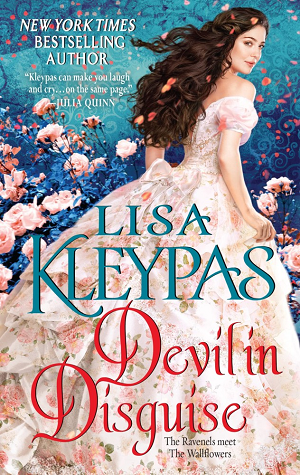
Devil in Disguise (The Ravenels #7) by Lisa Kleypas


Lady Merritt Sterling has been running her late husband's shipping business. Keir MacRae, a Scottish whisky distiller, meets Merritt and all of her carefully regimented rules to avoid scandal fall apart as soon as it becomes apparent that he is the target of a murderous man. Will these two fools make it?

(Look, this book has so many characters from the previous books that I think you would be entirely confused if you have not read the four Wallflowers books and the previous six Ravenels books. I think the fact that these books become less and less able to stand on their own is a serious detriment of the series, but if you like seeing multiple generations do their thing then this will be right up your alley.)

Interesting characters: WHY DO HER HEROES ALWAYS HAVE DADDY ISSUES?!?! I am really over it. I mean, why can't Keir just be a guy who had a lovely mom and dad and just falls in love? 

Who even cares about Merritt? She's okay, I guess, but not one of the best leads ever.

Believable conflict: OH MY GOD. WHY DO I READ THESE BOOKS? I mean, it's so convoluted what the conflict really is and I honestly don't believe any of it is BELIEVABLE. Thank goodness this is the last book in this series and you won't have to hear me screaming about this again.

Emotional tension: For heaven's sake. There is no tension. They sleep together almost immediately, and even the amnesia thing doesn't stop them. I have no words for how terrible this book is.

Happily ever after: Oh, I bet you know how this book ends, don't you? I'll give you one hint: baby. *sigh*

Here's the thing. I started to like these books because of the witty banter and all of the lines of banter I marked in this case were all from characters who were not our leads. What is this book, Lisa Kleypas?!

2/5 stars

Lines of note:

“How do you know I won’t insult her virtue?” the Scotsman demanded in outrage.

Luke lifted his brows, looking mildly interested. 

“Are you going to?” 

“No. But I could!” (location 538)

This was banter between the hero and the lead's brother. They have more chemistry together than the main couple.

“I’ve never cared for the phrase ‘falling in love,’ as if love were a hole in the ground. It’s a choice, after all.” (location 727)

Is it? Is it a choice? Interesting.

“Common interests can be acquired,” he pointed out. “What matters most is having similar values.”

 “Oh? What values do you and Evie have in common?” But the question sounded teasing rather than mocking. 

Sebastian thought for a moment. “She and I have both always wanted me to be happy.” (location 4141)

NOT OUR LEADS.

Thursday, February 09, 2023

Tomorrow, and Tomorrow, and Tomorrow by Gabrielle Zevin


Tomorrow, and Tomorrow, and Tomorrow by Gabrielle Zevinis the fictional story of video game creators and how their lives go once they meet each other. It's a book with a really ugly cover, a love triangle, and lots of bullshit about videogames. 

Look, all the reviews told me that it was no big deal if I wasn't a gamer. The book is "accessible" and "powerful enough to transport us to a world not our own." Those reviews are lies. This book with endless scenes from video games. ENDLESS. And it didn't transport me is what I'm saying.

If you're into love triangle with cheap plot points and an unsatisfying ending, read this. Otherwise, feel free to skip this one. 

2/5 stars

Line of note:

They had the rare kind of friendship that allowed for a great deal of privacy within it. One of the reasons they had become such good friends originally was because she had no insisted he tell his sad stories to satisfy her own curiosity. The least he could do was return the favor. (page 63)

Things I looked up:

cicerone (page 65) - a guide who gives information about antiquities and places of interest to sightseers

collogue (page 131) - to confer confidentially; intrigue or conspire

William Morris's Strawberry Thief - one of the most popular repeating designs for textiles

By The original uploader was VAwebteam at English Wikipedia. - Transferred from en.wikipedia to Commons by NotFromUtrecht using CommonsHelper., CC BY-SA 3.0, https://commons.wikimedia.org/w/index.php?curid=8929907


Tuesday, January 17, 2023

Spoiler Alert (Spoiler Alert #1) by Olivia Dade

I've complained about this before, but I'm complaining about it again. My podcast situation is DIRE right now. So many podcasts take January off and I've cleared my backlog of podcasts and started just searching for all the books on my TBR list as audiobooks so I'd have something to listen to while I walked the dog. Sure, I could just take out my earbuds and listen to nature or listen to music or something, but what I want when I walk the dog is someone nattering in my ear so it seems like I have company while I'm walking the dog.

Spoiler Alert by Olivia Dade and narrated by Isabelle Ruth was the first book that I looked for that was available. 


April writes fanfic about characters from a popular television show, a Game of Thrones ripoff. She's also a geologist and changing jobs to a location with a more laidback office culture. Marcus is the star of that popular television show and he also writes fanfiction as a way to pushback against the terrible scripts that the last few seasons of the show have produced. Through a twist of fate, they meet and have dinner together without knowing that the other is their fanfic beta reader. April admits it upfront, but Marcus holds on to the secret as they fall in love. There's some push back against their relationship, particularly in the media, because April is fat and Marcus is hot. 

The Good: Plus-size representation is good, right? I like that Marcus likes April's body and I feel like April owns her look and fashion sense. It's also good that April has genuine interests (her job, her fan fiction, designing costumes) and she has friends.  I also like that neither of them had to change who they were at the end of the book. There was no makeover for April, Marcus didn't start eating donuts around the clock, and they were still together.

The Bad: April is essentially perfect. She realizes she makes a mistake and immediately apologizes. She is in full emotional crisis, but somehow has the presence of mind to consider his feelings and alternate scenarios? I just can't with her.

But more than that? Marcus continually just lying to her when he should have had a conversation with her within a few dates? Just. No. I was absolutely disgusted with the whole thing.

The Ugly: Cringe. The fanfiction excerpts were cringe. The sex scenes were terrible. The constant use of the adjective "round" to describe April was sort of insulting. No. Just no.

I wonder if this would have been a different experience if I had read it instead of listening to it, but even then I think I would have found this book to be a terrible read.

1.5/5 stars

Thursday, November 10, 2022

1.10 Judgment - Carrie Soto is Back by Taylor Jenkins Reid

Bestest Friend and I are doing a blog project. Every day we will write a blog post on a pre-determined theme chosen by a random noun generator. The theme for the tenth day of the month is "Judgment." I have personally decided that I will pass judgment on a book on the tenth day of each month. 

***************
I'm in a bit of a reading rut and everyone was raving about Carrie Soto is Back by Taylor Jenkins Reid (Goodreads reviews are an outstanding 4.29/5 stars!) and who doesn't love some Reid? I have been mixed in the past (loved Daisy Jones, meh on Malibu Rising), but surely this book would get me out of my slump. Surely.


Carrie Soto retired from tennis six years ago after a knee injury, but her winning record is about to be broken by another player, so she's going back into the fray to make sure she remains on top. She ropes her dad into coaching her and she starts training with a male tennis player named Bowe Huntley. Meanwhile, the media is mocking "the Battle Axe" and suggesting she's too old and too broken down to succeed. But Carrie Soto isn't giving up.

You know what I don't care about? Sports. 
Pages like this nearly sent me screaming into the void: 
I take the next point. 15-love.
Her point. 15-all.
Her point.
Her point. 
Match point.
I serve it low. She returns it down the line. Don't let them all be right about you.
I hit a drop shot. (page 154)

I guess TJR's in a rough spot here because if she left tennis off the page, people would riot, but people like me are just napping their way through endless passages about shots and scores and boring shit.

You know what else I don't care about? Uber successful people who are single-minded in their pursuit of being the best to the detriment of everything and everyone around them. 

You know what else I don't care about? Self-absorbed people. 

You know what else I don't care about? This book.

As I've said about a few TJR books now, I love that she writes female friendships in a real way. Carrie's developing relationship with Nikki Chan, her tennis rival, is really great to see. I'm clearly hungry for female friendships on the page. But Carrie's relationship with her agent is absolutely one way, with her agent doing all the work and Carrie giving nothing back. I guess it's real life because we aren't great friends with everyone in our life, but it seems like TJR wanted us to like Carrie because these two women like her and that just didn't come off the page for me. I mean, I don't have to like someone to want to read about them, but in this case, I didn't want to read about her because I just didn't want to spend time with her. It's like TJR wanted to write about a difficult woman, but couldn't quite strike the balance of Carrie's acerbic nature and still want the reader to come back to find out what happened next.

(I feel quite defensive about this. I don't think main characters need to be likeable. I enjoyed Smilla and Maud and Ove. But if your character is unlikeable, you need to have something there to make me want to go back and read more. It's not clear to me why the other characters in this book - including the love interest and the agent/friend - support this character. I'm honestly quite upset that I'm having these problems with the book because it makes it seem like I am being cruel about "unlikeable" women and that's not the case at all.)

I have a deep respect for TJR's ability to write in such varied settings of Hollywood in Evelyn Hugo, music and Daisy Jones, and tennis in this one. But that doesn't mean every setting is right for every reader.

2.5/5 stars

Lines of Note:
"We are older. Our bodies are different. You can't ignore that just because it's inconvenient." (page 123)
I went to a gynecologist appointment last week and I explained an issue I was having and the doctor listened and then said, "as we get older..." and I wanted to weep. I mean, it is inconvenient with my body doing things it's never done before.

He has a placid look on his face that reminds me of the surface of the ocean - which is to say it looks tranquil, but you know there are sharks mauling baby seals underneath. (page 147)
What a revolting metaphor. This is Carrie's inner monologue. Can you see why maybe I didn't want to hang out with her?

We live in a world where exceptional women have to sit around waiting for mediocre men. (page 297)
TJR gets it right in one.
 

Monday, August 15, 2022

The Secret Place by Tana French

The Secret Place is the fifth book in The Dublin Murder Squad series by Tana French. Mostly I read this book because Lisa said the sixth book is her favorite and I couldn't bear to just skip a book.


First up, I think we can all agree that these are the most boring covers in the history of cover art. Combined with the humdrum titles, I just can't imagine that the exterior of these books would ever entice someone to read them or, frankly, remember them.

And then there's the plot of this book, which basically revolves around which teenager told another teenager something and which teenager read another teenager's text messages. Look, here's the truth. I didn't care about teenage drama in high school and I really could have cared less about it in this book. Absolutely the most boring topic imaginable. AND THEN! THEN! Let's discuss French's descriptions of teenage girls, shall we?  Keep in mind that our main character is an male police detective.

"No beauty - no height, no neck and no waist, plenty of nose to make up for it - but she tried. Hard-work straight blond hair, fake tan." (page 71)

"Tall, slim - trying hard for thin, only she didn't have the build for it. Pretty, top end of pretty, but that jaw was going to give her man-face before she was thirty." (page 78)

"Short little thing, scrawny, shoulders curled in. Fidgety fingers, twisting at her skirt. Hard-work straight blond hair, fake tan, skinny eyebrows." (page 82)

"Long dark-brown hair in a ponytail, soft and straggly, no straighteners here. Maybe an inch taller than Holly; skinny, not scary-skinny but definitely could have done with a pizza." (page 103)

I could keep going. Why does French hate teenage girls so much?! I was really turned off by this book and thought it was gross. Misogyny by other women is not a look I care for. Do not recommend.

2/5 stars

Things I looked up:
Keep schtum (page 78) - (also stay schtum) to not say anything about something; to remain silent
Dosh (page 338) - British slang word for money

Line of note:
Conway moved. Said, "You got a boyfriend?"
"No."
Instant. Almost scornful, like it was a stupid question: You got a rocket ship? (page 109)

One time, my nephew was five and I asked him if a decoration on his paper airplane made it go faster. His look of utter disdain for me has haunted my dreams ever since. This exchange made me think about how young people really think adults are idiotic. 

Friday, May 20, 2022

The Art of Losing by Alice Zentiter (translated from French by Frank Wynne)

Our book club book for the month was The Art of Losing by Alice Zeniter. 


Well, it has not been since The Luminaries that I dreaded reading a book club book so much and bitched about reading it. At one point, I actually told my husband that it's no wonder people don't read books if they're reading things like this. It felt like a dreaded homework assignment and I was an absolute pill about it.

It's the story of three generations of an Algerian/French family resonant with themes of the immigrant experience: loss, language, culture, religion, and home. 

The Good: I didn't know much about the Algerian fight for independence or really any of Algeria's history or culture. I feel like I have a better grasp on that now, particularly how badly the French acted in the conflict and how they treated Algerians who moved to France.

The Bad: I don't know if it was a translation issue, but the whole thing was just really slow and boring. I just couldn't connect with any of the characters. 

Book Club Takes: I was the only one to finish and most people did not make it through the first part. There was another person soldiering away, claiming to enjoy the story, but she was the one who recommended it in the first place, so I'm pretty sure she was just being a bit defensive.

I think our main take was that this book was told mostly from the perspective of the men in the book and it would have been more interesting for us if it had included more female perspectives. I like a book in which someone who is on the periphery of Big Things is telling the story because you get a firsthand tale, but it's usually someone who has a little more distance from the decision making to sort of tell you as a reader if the things that are happening really make sense. The grandmother figure in this book could have been the narrator for the whole thing and it would have been super interesting. Or have her narrate the first part, the mother narrate the second part, and then there would have been no men as central figures.  Oh, well. That's not the book we read.  

I definitely would not have finished this book if it hadn't been for book club. 

2/5 stars

Lines of note:

Marriage is order, structure. Love is chaos - even when it is joyful. It is hardly surprising that the two do not go together. It is hardly surprising that people choose to build a family, a home, on the foundations of an enduring institution, on a straightforward contract rather than on the quicksand of emotions. (page 94)

Interesting perspective from a culture that has arranged marriages.

And often, among the hulking bodies of the adults, he sees the frail face of a child interpreter, a child scribe who reminds him of himself, a child he cannot face without being ashamed. (page 282)

There were occasional sentences like this that really boiled down some of the immigrant experiences people talk about a lot into simple, powerful statements.

Things I looked up:

Ben Bella (page 157) - Leader in the Algerian War of Independence who became the first prime minister and first elected president of the Algerian republic. 

Hieratic (page 308) - of, or concerning priests

Makroud (page 311) - This is a popular Algerian dessert. I made some and took it along to our meeting and it was delicious, although I'm sure some Algerian grandmother could have made it much better.

Shootings at Toulouse and Montauban (page 320) - A series of terrorist attacks in France in 2012.

November 13, 2015 Bataclan (page 321) -  Terrorist attacks in Paris.

Matoub Lounes (page 389) - Absolutely fascinating character. Algerian singer and poet who was an advocated for human rights and secularism in Algeria. His atheistic proclamations made him unpopular with both sides of the civil war and his assassination sparked riots.  

Monday, February 14, 2022

Fix Her Up by Tessa Bailey

Fix Her Up by Tessa Bailey is the first in the Hot & Hammered trio.  Georgie's family runs a home renovation company, but she's out on her own, providing entertainment at children's parties, frequently in a clown costume. Her family treats her like a child, but she's just purchased a house and is excited for what the future of her business might be. Meanwhile, across town, Travis Ford has moved back in to town after his professional baseball career has fizzled out. Georgie's been in love with him since he was her brother's best friend in high school, and soon the sparks are flying between the two of them.

Interesting characters: I do not know where to start with this. 

Georgie is a doormat. Her family treats her like absolute crap. They treat her like a child, ignore her when she speaks, and don't listen to anything she says. Early on in the book, she invites her brother and sister-in-law over to brunch and we see her remind him twice, but he doesn't tell his wife and they don't show up. What does Georgie do? She calls her parents and tells them that she slept in and the brunch is off, despite having spent all morning preparing for the brunch. Why would she not just tell her parents that her brother screwed up? Why take the blame herself?  

And then there's Travis, who is gross, gross, gross. He calls Georgie "baby girl" and spends the first half of the book spending way too much time thinking about her virginity status. He sexualizes her every move. Once she cuts her hair and starts wearing dresses, he's unbearable. He's also a man who has so much privilege (he's an attractive white man who was a professional athlete with no money concerns) and he's so full of self-pity that it's hard to take him seriously.  

And then there's this scene. I'm going to abbreviate some of it, but here it goes:

Morty [Georgie's father] held up a hand. "Let the adults talk, Georgie."

Travis's fist slammed on the table so fast, everyone jumped. He hadn't planned it. But anger went ripping through him so fast, his hand moved on its own. That single action hadn't taken the air our of his ire, either. Not even a speck. "I have a lot of respect for you, Mr. Castle...But I can't sit here and listen to you treat Georgie like her voice doesn't count for something. You're better than that. And she's damn sure too important to be cut off or spoken to like a child." 

Everyone had a different reaction to his outburst...He got even angrier, actually, because this girl who'd forced him to climb out his hole all those week ago looked so grateful when she should have expected someone to come to her defense. (page 236-237)

Let's interrogate this scene this for a minute, shall we?  Why is Travis so quick to lose his temper?  His hand moving of its own accord sounds quite dangerous to me. This is like the set-up for a scene in which he's throwing around furniture and handing out black eyes.  

Okay, well, let's move beyond the implied violence, then. This girl who'd forced him to man up and stop being a whiny baby because his career ended?  This girl? He'd literally just lectured her father about speaking to her like a child, but his inner monologue thinks of her as a girl

I can't believe I read this entire book.

This was published in 2019, not 1969. Why are the parents behaving like that? Why is she not standing up for herself? Why is the male lead such a jerk?

(Here's time for me to say that Georgie's brother is an absolute caveman when it comes to how he treats his wife. He's constantly coming into rooms and grabbing her and making her leave. I don't know if this is how all Bailey's male characters are, but it felt really nasty and abusive in a modern context.)

(And the title of this book? Fix Her Up? WTF? I'm pretty sure Georgie would have figured her mess out without Travis. Even if it's referring to her home, I find the double entendre of the name quite off-putting. I had to look up synonyms for gross and revolting because I've already used those. This book clearly ticked some "NGS doesn't like" boxes.)

Believable conflict: Look, if you believe their characterizations, of course Travis is never going to stop thinking of Georgie as a girl he used to know. Of course Georgie is still flying high on her crush from several years ago finally giving her some attention. Regardless, the stakes seem low. 

Emotional tension: There is no tension. They're fake dating, having steamy sex for real, and there's no doubt that these two have feelings for each other. It's just going to take one conversation and that will be that. 

Happily ever after: I...guess? There was a proposal. He has a new job. She's doing well in her business. But have they really dealt with the baggage from the past? I don't know. Maybe it will be fine. Maybe it will.  But I'm glad I don't have to deal with Travis. 

There are a lot of charming elements to this book - in particular, I think Georgie's very funny and I like the interactions between Georgie, her sister, and their friend Rosie. I didn't realize that authors writing female friendships was something I was so hungry for, but I latch onto it whenever I see it in books these days.  That being said, Georgie's inability to speak for herself and an incredibly unlikeable hero who I sometimes read as abusive cannot be redeemed by a few funny lines.  1.5/5 stars

Monday, January 17, 2022

Never Look Back by Lilliam Rivera


Never Look Back by Lilliam Rivera is a modern retelling of the Greek myth of Orpheus and Eurydice with Afro Latinx characters. If you don't know the myth, you could probably still read this book as a standalone, but I think you would miss some nuances. 

Pheus is a talented young musician who goes to visit his father in the Bronx where he meets Eury, the new girl whose traumatic past includes surviving a natural disaster and an abusive parent. There's an attraction there, but Eury keeps Pheus at a distance as she navigates her mental health. 

I wanted to like this book, I really did. But the book is a bit scattered for my taste. Is Eury in the middle of a psychotic break or is the figure she's seeing real?  Also, it seems like the main conclusion is that true love will heal mental illness. *sigh* As a retelling, the happy ending felt forced and wrong.

There were things I did like. I liked Eury's portrayal of Puerto Rico and her love for her home really came through the pages. I liked Pheus's father - it was so nice to see a father figure in YA that was supportive and nurturing. I liked the background of Bronx told from the perspective of a young person.

But, in general, I was not on board with this book. Disappointing.

2.5/5 stars

Lines I Highlighted:
"Guys always trying to win over a girl like she's a prize. As if this life is a contest." (page 106)

"It's funny how cruel time can be. When you are at school, the clock just toys with you, its seconds slowly moving. In the summer, it's a joke how quickly time flies." (page 159)

Wednesday, January 12, 2022

The Friend Zone (The Friend Zone #1) by Abby Jimenez

In The Friend Zone by Abby Jimenez, Kristen Peterson meets Josh Copeland because he's the best friend of her best friend's fiancĂ©e. Kristen is already seeing somebody and boy is she a mess. She works at home with her adorable dog because she has a lot of health issues.  Josh and Kristen get along great and soon he starts working for her as a side hustle. Meanwhile, Kristen's boyfriend breaks up with her and the sparks really start flying. But Kristen has a secret and she won't share it with Josh and it's keeping them apart. 

(At this point, I am going to spoil the book. You've been warned.)

Interesting characters: Hm. They're interesting, but Kristen's "not like other girls" and Josh's guns and ammo characteristics are not favorites of mine. They are well-developed and I enjoyed a lot of the banter they had, particularly in the first half of the book. There's a great bar trivia scene.

Believable conflict: (MAJOR SPOILERS) Kristen has fibroids and has decided to have a hysterectomy to help her with her pain management. Josh really wants children. Kristen keeps this from him, but admits that she's attracted to him and keeps pushing him off because she knows that she's (going to be) infertile.  This is real life and I get it. I thought it was dumb of her not to just tell him, but I also understand that being vulnerable about fertility struggles is not something a lot of folks feel comfortable doing.  This conflict is honest and I wish more authors would write about things like this in romance novels.

Emotional tension: Eh. 

Happily ever after: (Seriously, there are SPOILERS) The ending of this book is going to stay in my head forever. Kristen accidentally gets pregnant because her IUD came out during one of her heavy flows (!) and has a completely healthy pregnancy and this whole fertility storyline thing was just swept away.  Look! A healthy baby boy who is completely biologically yours and your husband's! I was so mad.  Why couldn't they go through more struggles with adoption or surrogacy? Why couldn't they just NOT have kids because of the expense?  I know that romance novels are supposed to be wish fulfillment, but I can't help but feel terrible for the women out there reading this book, relating to the storyline, going through their own fertility struggles, and then getting blindsided by the pregnancy at the end.

Jimenez wrote a couple of interesting things in the afterword. One, this whole fibroids/surprise pregnancy thing actually happened to one of her friends. Two, "Kristen's happy ending was never about getting pregnant. It was about her allowing herself to be loved, despite what she felt were shortcomings." I feel sorry/happy for her friend, but I still think Jimenez had a responsibility to play the odds of what would happen in this situation (i.e., no pregnancy) AND I think if the HEA was about just finding love, the pregnancy should have been left out. Her afterword did not sway me from my opinion that this was a terrible, terrible ending.

Women's health is not taken seriously by the general public (did we learn nothing from Invisible Women?) and most medical practitioners. I've seen it repeatedly be disregarded in romance novels, too (see When He Was Wicked and The Bromance Book Club). I think it would be great if romance novel authors wrote about hard topics and took them seriously. But if they're not going to resolve tough topics in a way that makes sense in the real world, then they shouldn't write about them because they're doing more harm than good with their false sense of optimism. I'm still pissed at The Bromance Book Club for not dealing with anorgasmia in women and I may not ever get over it. Romance novels deal with issues of sexuality, interracial dating, sexual trauma, and mental health, so it's not as if romance novels can't engage fruitfully in hard social topics while still maintaining the possibility for a happily ever after.

End soapbox. 

This book has a fun beginning, but there is a huge trauma in the middle of the book and then there's the pregnancy thing at the end. (LOOK AT THAT COVER! Does that look like the cover of a book where there's a HUGE BIG BAD THING in the middle of the book? Where's the dog on the cover? What is even happening with this book?!)

(Also, there's a scene where the main character is at the hospital for what seems like a day or two and she never talks about who is walking/feeding her dog and then when she gets home she just falls into bed like SHE DOESN'T HAVE A DOG WHO NEEDS CARED FOR. And no mention of the dog in the epilogue scenes. Argh.  I'm irate on behalf of this (fictional) dog.)

End soapbox for real. 

Wednesday, July 21, 2021

Axiom's End by Lindsay Ellis


Axiom's End is the debut novel of Lindsay Ellis, a YouTuber who I guess is popular?  I am an old. Anyway, this book was absolutely terrible and I guess that New York Times bestselling status on this book is merely a product of her fanbase.

This book has an amazing premise. Cora, daughter of a rabblerousing whistleblower, is the first person on the planet to be able to communicate with an alien. Fun and hijinks should ensue! Instead what ensues is a very, very tedious examination of the US bureaucracy and a low-level stress over the fate of two dogs.  

I always expect new sci-fi to reject the great white men narrative and am shocked when they don't.  This book, with its clunky dialogue and overarching love of the FBI and CIA, could have been written by Asimov or Heinlein, despite its young female author. What's even more disappointing is that the book is superficially anti-alphabet agencies, with the screeds from the rabblerousing father, but it's absolutely clear in the book that the father is the bad guy, so that obviously leads us to believe that folks in law enforcement are the heroes. Gag.  

The plot is boring, the characters incomprehensible, and the writing is serviceable, but dull. I would not recommend this book and I won't be checking in with Ellis' YouTube channel or podcast anytime soon.


Monday, April 19, 2021

Ready Player Two by Ernest Cline


Ready Player Two by Ernest Cline is the unwanted sequel to the divisive Ready Player One. I, for my part, really enjoy RP1. It's got a great world, a great plot, and sure, the characters were paper thin and the main character himself a bit dimwitted and sexist, but he was determined and focused and I could forgive many of his faults. I also think RP1 is a great intro into sci-fi for reluctant high school readers, particularly young men.  I have recommended this to two of my tutoring students who then asked for more (I steer them toward Ender's Game and after that they have to figure it out for themselves). What I am telling you is that I genuinely enjoy and recommend RP1.  

And then there was the extreme disappointment of Cline's sophomore book Armada, of which the least said the better.

I went in to this book having heard it was bad, but Ready Player One also has a fair number of detractors who have legitimate criticisms, but seem to really miss the fun.   So I was cautiously optimistic that haters are gonna hate, hate, hate, hate, hate, and I put the book on hold and was pleased when my Libby hold came through.

I was ten pages in and I knew, I KNEW, this is a bad book.  

What makes the first book so good is that it is all action all the time. There's some world building, but that world building is done in service of the action. We are dropped into the action immediately and it never stops.

This book is a SEQUEL with the first 100 pages devoted to MORE WORLD BUILDING we don't need.  I was bored.  And then it turns out that we're back on the exact same narrative as the first book in which we're going after these Easter eggs, but the quests are far less fun or interesting. 

(Tangent: I know I lived in Minneapolis, but I don't care for most of the music stylings of Prince and despite my love of the Twin Cities, even I thought the whole Prince storyline took 3948239048 years and put me to sleep for three nights in a row.)

I wish the novel just dropped us into the action, like we are dropped in the middle of the Prince task and then there were flashbacks to the previous tasks and then we could move forward. Nix the first 100 pages of world building and then just weave the narrative of technological developments that are different from the first novel into descriptions of what happened. 

So disappointing. It's really a bad book.  


Wednesday, March 24, 2021

The Bear and the Nightingale (Winternight Trilogy #1) by Katherine Arden


Do you ever read a book and wonder what the fuss is? I felt this way when I read Circe, a book beloved by so many people, but that just left me cold? And I found myself wondering a lot about why The Bear and the Nightingale by Katherine Arden is as beloved as it is. This trilogy is listed as #11 on a list of /r/fantasy's Top Female Authors from last year.  Now you know how I choose what fantasy books to read. I'm just working my way down that list, slowly but surely. I'm excited for the updated list to come out soon.

Anyway.

This book. A young girl is raised in the Russian forest, torn between the new gods and the old. She sees the household spirits, but her new stepmother forbids their worship and soon the crops begin to fail and misfortune plagues the village. This is the tale of Vasilisa and Frost, the winter god.

I had a brief, but intense flirtation with retold fairy tales, mostly in the form of Gregory Maguire novels. Son of a Witch and Confessions of an Ugly Stepsister were all I talked about for a brief period of time in my life. But this one? Eh, I just didn't care much. 

Here's the thing. Vasilisa is just not a good character. She's too perfect for me. She never makes mistakes. She knows how to work with the household spirits. She talks to horses. She gets in trouble at home, but accepts her whippings stoically without defending herself. She never does anything wrong and, at the end of the day, that's just not a believable person to me. And since she's not believable, I end up just not caring about her. Since I don't care about her, I just ended up not really getting into the spirit of this book.

I would not recommend this book, but Goodreads and Reddit readers disagree with me, so do with that information what you will.

Friday, January 15, 2021

The Hollow Kingdom by Clare B. Dunkle

 I accidentally put a hold on The Hollow Kingdom by Clare B. Dunkle instead of the book with the same name by Kira Jane Buxton.  So be prepared to soon read another review of a book with this same title.


Do you remember that in the first season of American Idol there was a second co-host in addition to Ryan Seacrest named Brian Dunkleman? I kept thinking about him whenever I'd look at the name of the author of this book?  That's probably unnecessary for you to know, but I want you to know my every thought about the books.  

One sentence summary: A girl gets kidnapped by a goblin and becomes his bride, but later on she saves the goblin race. 

So.

This book.

Look, I'd been on a bit of a tear and hadn't finished like three books before this one came into my life. I was determined to finish this book because I was starting to think my brain was incapable of completing any projects.  But to be honest, I probably would have just put this book down after the following paragraph from PAGE 9:

Gracious and white-haired, Celia Whitaker beamed across the dinner table at her great-nieces, and Kate and Emily Winslow smiled shyly back. The girls were grateful to find a smile at the end of their journey.  It had been a hard two months.  Their father had died suddenly. By scrupulously legal tradition, his house and lands near Coventry now belonged to his nephew, the next male relative, and this man had refused to become their guardian. The Hallow Hill estate belonged to Kate from her late month, but she had never visited it. It had been rented to another branch of the family for generations. Now Kate and her younger sister were coming home to land a relatives they had never seen. Hugh Roberts, a bachelor cousin of their mother's, had become their legal guardian, and the two great-aunts, Celia and Prim, had agreed to raise the sisters. 

So much boring exposition. And that just keeps going on.  Huge, giant paragraphs that are nothing but boring exposition dumps.

Look, I'm not much of a writer. I write here, I write very boring emails, and I write letters to my my relatives. I don't write fiction hardly at all, but here's my reader's take on how to fix this mess.  You start in medias res, with the dinner scene.  As there are interactions among the characters, you introduce the relations.  OR.  Maybe you just go around the room or table, introducing the players.  You don't just start with a giant boring paragraph about legal guardianship!  

Here's the rub. One page 103, the books gets interesting.  The exposition dumps (mostly stop) and it's action and interior monologues.  It turns into a bit of a page turner. 

As the (purely fictional) editor of this book,  I suggest Dunkle delete the first 102 pages (maybe I will allow the prologue to stay) and just start the book on page 103 and use the action to explain all those details that were introduced so clumsily in the first section of the book.  You don't even need to rewrite that dinner scene at all because we're going to take it out!

Since we're doing this major overhaul of the book, we can actually deal with the emotions these orphaned girls might be dealing with - the loss of their father, their school mates, their home - instead of making them robots who think logically about all their feelings and reactions.  We can also learn more about the goblin race and what it is that the girls do in the goblin world all day.  The last part of the book is great about plot, but now we need to sprinkle in character development.

So.  I won't be recommending this book to anyone. But I finished it, figured out what I didn't like about it, and managed to (purely fictionally) fix it so that it's a better book,  and that feels like a major accomplishment for me these days.